
Compared to existing fusion projects or fission reactors, instrumentation is also a consideration for welding engineers at ITER. The ITER tokamak contains an enormous number of diagnostics, sensors, cables, studs, and supports because the machine is designed as an experimental device and scientists want to measure and understand virtually everything that happens inside the plasma. This means ITER has far more instrumentation to weld into place than any eventual commercial fusion power plant, which would be optimized for operation.
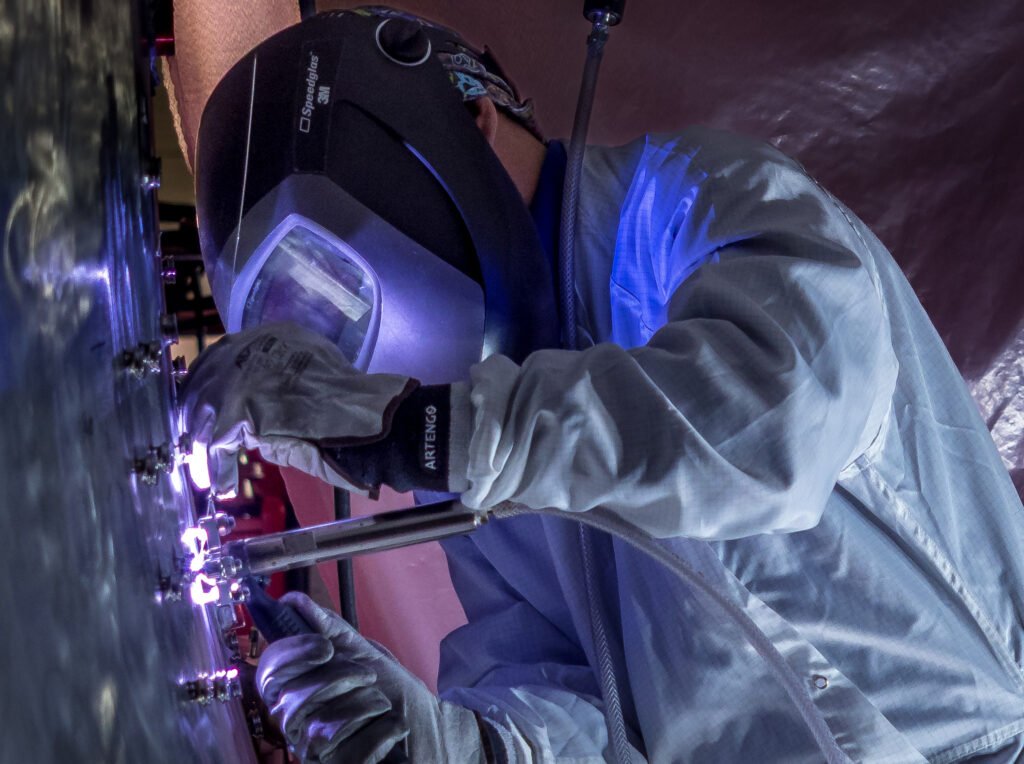
But perhaps the most daunting challenge welders face is space constraints. When components are manufactured in factories or welds are performed on-site in ITER’s support buildings or sector sub-assembly tools, there is room to work. Inside the tokamak, space is becoming increasingly constrained and some welding locations are difficult to access. ITER has developed virtual reality simulations of the tokamak configuration that will help engineers create new welding strategies adapted to the environment.
“Now that five sector modules have been installed in the tokamak pit, everyone can see how limited the available space is becoming,” says Frédéric Lobinger. “The machine is large, but once dozens of workers, tools, pipes, diagnostics, and support structures occupy the same area, access is an issue. Accessibility will be one of the defining challenges of welding.”
As these diverse welding issues are solved over the coming years, the techniques will be rigorously documented to help define future fusion standards.