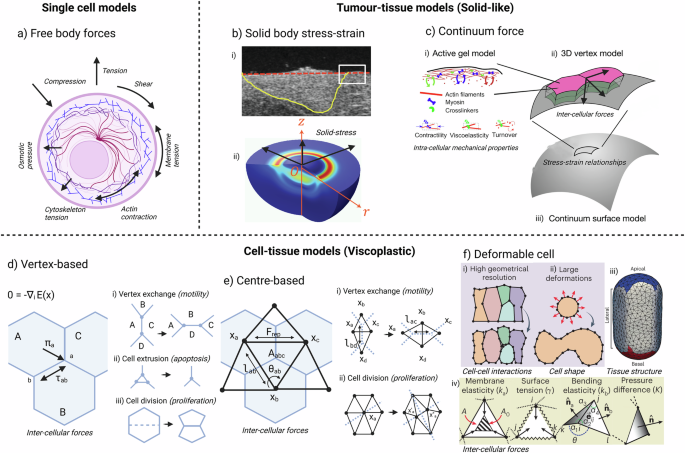

Linke, J. A., Munn, L. L. & Jain, R. K. Compressive stresses in cancer: characterization and implications for tumour progression and treatment. Nat. Rev. Cancer 24, 768–791 (2024).
Hayakawa, K., Hirata, H., Samsonov, M. & Sokabe, M. Planar compression of extracellular substrates induces S-phase arrest via ATM-independent CHK2 activation. Biochem. Biophys. Res. Commun. 506, 983–989 (2018).
Johnson, A. M. K., Froman-Glover, C., Mistry, A., Yaddanapudi, K. & Chen, J. The impact of compression and confinement in tumor growth and progression: emerging concepts in cancer mechanobiology. Front. Mater. 12, 1492438 (2025).
Xue, S. L. Tissue stresses caused by invasive tumour: a biomechanical model. J. Royal Soc. Interface 22, 20240797 (2025).
Kalli, M. et al. Mechanical forces inducing oxaliplatin resistance in pancreatic cancer can be targeted by autophagy inhibition. Commun. Biol. 7, 1581– (2024).
Massey, A. et al. Mechanical properties of human tumour tissues and their implications for cancer development. Nat. Rev. Phys. 6, 269–282 (2024).
Nia, H. T. et al. Solid stress and elastic energy as measures of tumour mechanopathology. Nat. Biomed. Eng. 1, 0004 (2017).
Salavati, H., Debbaut, C., Pullens, P. & Ceelen, W. Interstitial fluid pressure as an emerging biomarker in solid tumors. Biochim. Biophys. Acta (BBA) – Rev. Cancer 1877, 188792 (2022).
Hadjigeorgiou, A. G. & Stylianopoulos, T. Evaluation of growth-induced, mechanical stress in solid tumors and spatial association with extracellular matrix content. Biomech. Model. Mechanobiol. 22, 1625–1643 (2023).
Mao, Y. & Wickström, S. A. Mechanical state transitions in the regulation of tissue form and function. Nat. Rev. Mol. Cell Biol. 25, 654–670 (2024).
Antunes, M., Pereira, T., Cordeiro, J. V., Almeida, L. & Jacinto, A. Coordinated waves of actomyosin flow and apical cell constriction immediately after wounding. J. Cell Biol. 202, 365–379 (2013).
Pereira, D., Richert, A., Medjkane, S., Hénon, S. & Weitzman, J. B. Cell geometry and the cytoskeleton impact the nucleo-cytoplasmic localisation of the smyd3 methyltransferase. Sci. Rep. 10, 20598– (2020).
Niraula, G., Pyne, A. & Wang, X. Develop tandem tension sensor to gauge integrin-transmitted molecular forces. ACS Sens. 9, 3660–3670 (2024).
Shimolina, L. et al. Comparison of viscoelastic properties of breast cancer and normal cells using AFM, FLIM, and TOF-SIMS techniques. Sci. Rep. 16, 1655– (2025).
Pogoda, K. et al. Unique role of vimentin networks in compression stiffening of cells and protection of nuclei from compressive stress. Nano Lett. 22, 4725–4732 (2022).
Bulteau, R. et al. Atomic force microscopy reveals differences in mechanical properties linked to cortical structure in mouse and human oocytes. Small 21, 2500221 (2025).
Heyn, J. C., Juanatey, M. A., Falcke, M. & Rädler, J. O. Cell-mechanical parameter estimation from 1D cell trajectories using simulation-based inference. PLoS One 20, e0310669 (2025).
Zhang, S. et al. Intravital measurements of solid stresses in tumours reveal length-scale and microenvironmentally dependent force transmission. Nat. Biomed. Eng. 7, 1473–1492 (2023).
Khan, M. H. R., Islam, M. T., Taraballi, F. & Righetti, R. Assessment of compression-induced solid stress, fluid pressure and mechanopathological parameters in cancers in vivo using poroelastography. Phys. Med. Biol. 68, 135014 (2023).
Dwairy, M., Reddy, J. N. & Righetti, R. Predicting stress and interstitial fluid pressure in tumors based on biphasic theory. Comput. Biol. Med. 167, 107651 (2023).
Bal, P. K., Ouzeri, A. & Arroyo, M. Continuum theory for the mechanics of curved epithelial shells by coarse-graining an ensemble of active gel cellular surfaces. J. Mech. Phys. Solids 208, 106477 (2026).
Ebadi, Y., Shih, E. D., Barocas, V. H. & Alford, P. W. A continuum model for tissues with moderate cell density. Comput. Biol. Med. 197, 111025 (2025).
Miller, C. T., Gray, W. G. & Schrefler, B. A. A continuum mechanical framework for modeling tumor growth and treatment in two- and three-phase systems. Arch. Appl. Mech. 92, 461 (2021).
Farhadifar, R., Röper, J. C., Aigouy, B., Eaton, S. & Jülicher, F. The influence of cell mechanics, cell-cell interactions, and proliferation on epithelial packing. Curr. Biol. 17, 2095–2104 (2007).
Lange, Z., Matthäus, F. & Qiu, M. Vertex models capturing subcellular scales in epithelial tissues. PLoS Comput. Biol. 5, e1012993 (2025).
Masola, V., Franchi, M., Leitinger, B. & Mierke, C. T. Ecm mechanics control jamming-to-unjamming transition of cancer cells. Cells 14, 943 (2025).
Mimura, T. & Inoue, Y. Cell-center-based model for simulating three-dimensional monolayer tissue deformation. J. Theor. Biol. 571, 111560 (2023).
Ruscone, M. et al. Multiscale model of the different modes of cancer cell invasion. Bioinformatics 39, btad374 (2023).
Runser, S., Vetter, R. & Iber, D. Simucell3d: three-dimensional simulation of tissue mechanics with cell polarization. Nat. Comput. Sci. 4, 299–309 (2024).
Kong, W. et al. Experimental validation of force inference in epithelia from cell to tissue scale. Sci. Rep. 9, 14647– (2019).
Tah, I. et al. A minimal vertex model explains how the amnioserosa avoids fluidization during Drosophila dorsal closure. Proc. Natl. Acad. Sci. USA 122, e2322732121 (2025).
Tan, M., Song, B., Zhao, X. & Du, J. The role and mechanism of compressive stress in tumor. Front. Oncol. 14, 1459313 (2024).
Bertillot, F. et al. Compressive stress triggers fibroblasts spreading over cancer cells to generate carcinoma in situ organization. Commun. Biol. 7, 184– (2024).
Marcotti, S., Reilly, G. C. & Lacroix, D. Effect of cell sample size in atomic force microscopy nanoindentation. J. Mech. Behav. Biomed. Mater. 94, 259–266 (2019).
Gong, X. et al. Adaptation to volumetric compression drives an apoptosis-resistant and invasive phenotype in liver cancer. Cancer Res. 85, 3156–3175 (2025).
Pandey, M. et al. Mechanical compression regulates tumor spheroid invasion into a 3d collagen matrix. Phys. Biol. 21, 036003 (2024).
Boyle, S. T. et al. Acute compressive stress activates rho/rock-mediated cellular processes. Small GTPases 11, 354–370 (2020).
Mary, G. et al. Magnetic compression of tumor spheroids increases cell proliferation in vitro and cancer progression in vivo. Cancers 14, 366 (2022).
Malhotra, N. et al. Potential toxicity of iron oxide magnetic nanoparticles: a review. Molecules 25, 3159 (2020).
Ho-Bouldoires, T. H. N. et al. Ret kinase-mediated mechanical induction of colon stem cells by tumor growth pressure stimulates cancer progression in vivo. Commun. Biol. 5, 137– (2022).
Bhandari, M. et al. Benchmarking mouse contamination removing protocols in patient-derived xenografts genomic profiling. npj Precis. Oncol. 9, 113– (2025).
Alamán-Díez, P. et al. Elevated interstitial fluid pressure promotes spheroid growth and reduces CAR-T therapeutic efficacy in solid tumors. Acta Biomater. 10, 10–27 (2026).
Lee, S. et al. 3d microfluidic platform and tumor vascular mapping for evaluating anti-angiogenic RNAi-based nanomedicine. ACS Nano 15, 338–350 (2020).
Barbazan, J. et al. Cancer-associated fibroblasts actively compress cancer cells and modulate mechanotransduction. Nat. Commun. 14, 6966– (2023).
Xiao, Y. et al. Caf-driven mechanotransduction via collagen remodeling accelerates tumor cell cycle progression. Gels 11, 642 (2025).
Hill, S. M. et al. Optimized in vitro three-dimensional invasion assay for quantifying a wide range of cancer cell invasive behavior. STAR Protoc. 3, 101516 (2022).
Chiang, S. P., Cabrera, R. M. & Segall, J. E. Tumor cell intravasation. Am. J. Physiol. – Cell Physiol. 311, C1 (2016).
Tavasso, M. et al. Linking metastatic potential and viscoelastic properties of breast cancer spheroids via dynamic compression and relaxation in microfluidics. Adv. Healthc. Mater. 14, 2402715 (2025).
Clevenger, A. J. et al. Rapid prototypable biomimetic peristalsis bioreactor capable of concurrent shear and multi-axial strain. Cells Tissues Organs 212, 96–110 (2023).
Onal, S., Alkaisi, M. M. & Nock, V. Application of sequential cyclic compression on cancer cells in a flexible microdevice. PLOS ONE 18, e0279896 (2023).
Li, Y. et al. Compressive forces stabilize microtubules in living cells. Nat. Mater. 22, 913–924 (2023).
Luo, M. et al. Compression enhances invasive phenotype and matrix degradation of breast cancer cells via piezo1 activation. BMC Mol. Cell Biol. 23, 1– (2022).
Zhang, X. et al. Compression drives diverse transcriptomic and phenotypic adaptations in melanoma. Proc. Natl. Acad. Sci. USA 120, e2220062120 (2023).
Piplani, N., Roy, T., Saxena, N. & Sen, S. Bulky glycocalyx shields cancer cells from invasion-associated stresses. Transl. Oncol. 39, 101822 (2024).
Barai, A. et al. Bulky glycocalyx drives cancer invasiveness by modulating substrate-specific adhesion. PNAS Nexus 3, pgae335 (2024).
Wang, X., Helenius, J., Müller, D. J. & Strohmeyer, N. Compressed cells facilitate adhesion through glycocalyx. Adv. Sci. 12, e13586 (2025).
Kanyo, N. et al. Glycocalyx regulates the strength and kinetics of cancer cell adhesion revealed by biophysical models based on high resolution label-free optical data. Sci. Rep. 10, 22422– (2020).
Furukawa, K. T., Yamashita, K., Sakurai, N. & Ohno, S. The epithelial circumferential actin belt regulates Yap/Taz through nucleocytoplasmic shuttling of Merlin. Cell Rep. 20, 1435–1447 (2017).
Tauriello, D. V., Sancho, E. & Batlle, E. Overcoming tgfβ-mediated immune evasion in cancer. Nat. Rev. Cancer 22, 25–44 (2021).
Janus, P. et al. Transcriptional responses to direct and indirect TGFB1 stimulation in cancerous and noncancerous mammary epithelial cells. Cell Commun. Signal. 22, 522– (2024).
Dong, X. et al. Force interacts with macromolecular structure in the activation of tgf-β. Nature 542, 55–59 (2017).
Di-Luoffo, M. et al. Mechanical compressive forces increase PI3K output signaling in breast and pancreatic cancer cells. Life Sci. Alliance 8, e202402854 (2025).
Clevenger, A. J. et al. Oncogenic Kras mutations confer a unique mechanotransduction response to peristalsis in colorectal cancer cells. Mol. Cancer Res. 23, 128–142 (2025).
Vavourakis, V. et al. A validated multiscale in-silico model for mechano-sensitive tumour angiogenesis and growth. PLOS Comput. Biol. 13, e1005259 (2017).
Li, Q. et al. Ezh2 reduction is an essential mechanoresponse for the maintenance of super-enhancer polarization against compressive stress in human periodontal ligament stem cells. Cell Death Dis. 11, 757– (2020).
Martin, M. et al. Erbb2 overexpression triggers transient high mechanoactivity of breast tumor cells. Cytoskeleton 69, 267–277 (2012).
Fu, X. et al. An finite element analysis surrogate model with boundary oriented graph embedding approach for rapid design. J. Comput. Des. Eng. 10, 1026–1046 (2023).
Jun, B. H. et al. Fabrication of a novel 3D-printed perfusion bioreactor for complex cell culture models. Sci. Rep. 15, 10134– (2025).
Ahmed, S. et al. An overview of recent advancements in targeted cancer therapies and their potential clinical impact. RSC Med. Chem. 17, 784-805 (2025).