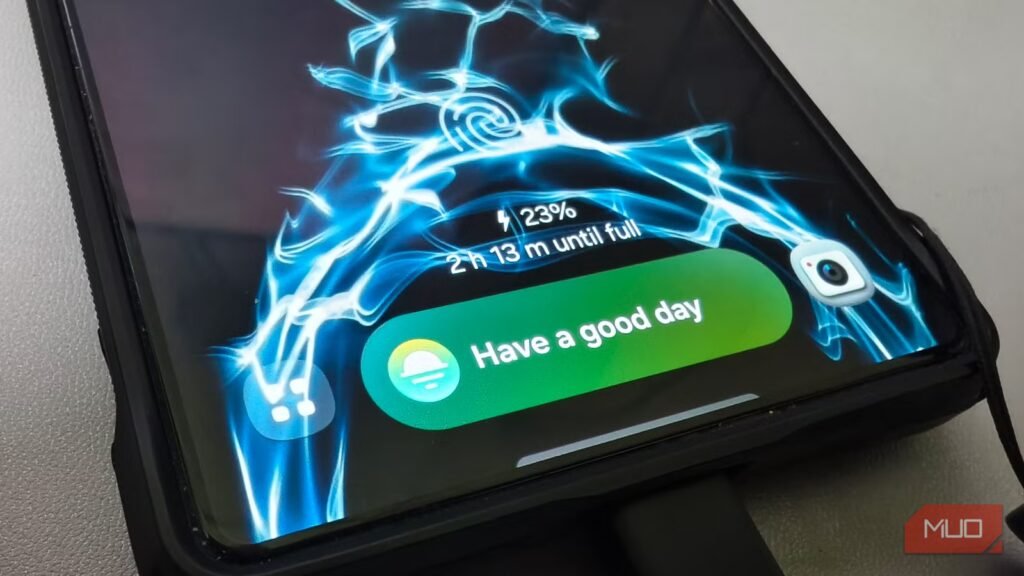

We have been conditioned to accept the daily smartphone charging ritual. We plan our lives around wall outlets, portable battery packs, and the anxiety of the 15% warning light. When silicon-carbon batteries slipped into premium tech over the last couple of years, we were told our multi-day battery savior had finally arrived.
It hadn’t. Silicon-carbon is old news before it even hit global mass adoption. The real battery revolution is happening right now in the transition to pure silicon and solid-state chemistry — and it will make your daily charger entirely obsolete
mAh is the worst way to compare power banks — this overlooked spec tells the truth
Comparing batteries by this metric is a bit like judging cars by cup holders.
Silicon-carbon fixed the boring part of phone batteries
Bigger cells, same old family drama
Let me be clear about what a silicon-carbon battery is, because the marketing can make it sound more radical than it is. It is still a lithium-ion battery. The core chemistry, the liquid electrolyte, and the basic movement of ions between electrodes remain the same. The major change is the anode.
Instead of relying entirely on graphite, manufacturers blend silicon into the anode because silicon can store far more lithium. Graphite has a theoretical capacity of about 372mAh per gram, while silicon’s theoretical ceiling is closer to 4,200mAh per gram. That gap explains why battery makers have been chasing it for so long.
The difficulty is that silicon is a troublesome overachiever. As it absorbs lithium, it expands dramatically, with pure silicon swelling by up to 300 percent. That kind of expansion can fracture the anode and shorten the cell’s useful life. The carbon in silicon-carbon is the compromise. It acts as a scaffold that holds the silicon together and keeps expansion down to something more like 10 to 20 percent. You do not get silicon’s full-capacity dream out of that arrangement, but you do get a real bump, usually quoted in the 10 to 20 percent range for energy density, with more aggressive designs reaching higher levels.
That bump is exactly why so many recent Android flagships, especially from Chinese brands, have pushed past 6,000 and even 7,000 mAh without ballooning in thickness. My colleague uses a phone with a silicon-carbon battery, and it is easy to understand why the hype caught on. It is a legitimate win, but that trade-off is why I understand Samsung’s caution.
Galaxy phones can look conservative next to Chinese rivals with huge silicon-carbon cells, but batteries sit near heat, radios, processors, charging circuits, and people’s pockets for years. According to Tech Radar, Samsung reportedly said its silicon-carbon work still has to satisfy strict validation standards first, which is not an absurd position.
Solid-state is where the battery story gets weird again
This is where the electrolyte gets evicted

Solid-state batteries, which are already being used in EVs, get my attention for a different reason. They change the part of the cell that silicon-carbon left alone: the electrolyte. A normal lithium-ion battery moves ions through a flammable liquid between the electrodes. A solid-state battery swaps that liquid for a solid one, and the substitution ripples outward. A solid, non-flammable electrolyte is inherently safer under impact and heat, and the loss of the liquid frees up packaging space, opening the door to denser, oddly shaped cells.
Samsung Electro-Mechanics has already developed an ultra-compact all-solid-state battery aimed at wearables, and with its original announcement now closing in on two years old, there is still no shipped device built around it. An unofficial Korean report later filled in more specifics, sketching a staggered rollout that puts the Galaxy Ring first, earbuds sometime around late 2026, and a Galaxy Watch trailing into 2027.
And I do agree that wearables are the sensible place to start. A phone can get a little thicker, and most of us will grumble for a day. A ring cannot grow much before it becomes uncomfortable. Earbuds have to fit in the ears and in charging cases. Watches need room for sensors, displays, radios, haptics, and waterproofing.
I want the future, not the battery fairy tale
Wake me when the charger goes missing

Solid-state has been described as almost ready for close to a decade now, mostly because the chemistry is easier to admire on a slide than to manufacture at volume. Solid electrolytes get finicky at the boundary where they meet the electrodes; dendrites can still find a way to grow and cause shorts; and producing these cells cheaply at real scale is really quite difficult. Consumer devices raise the bar further, since a battery has to survive years of charge cycles, heat, drops, and power management software while still meeting warranty expectations.
Samsung SDI, according to South Korea’s JoongAng Daily, is targeting mass production of its all-solid-state batteries in 2027, with a roadmap that includes EVs, humanoid robots, and mobile devices. Mind you, this is the same company behind batteries used in Galaxy phones today, which makes its timeline worth taking seriously.
However, I would treat that as a signal rather than a guarantee. It does not mean mainstream Galaxy phones are about to ditch current lithium-ion designs overnight. Phone batteries have to pass a grim little gauntlet before they reach your pocket, including safety, thickness, charging speed, cycle life, cost, shipping rules, and warranty risk.
I do not need magic; I just need fewer charging cables
So here is where I land. Silicon-carbon earned the attention it got because it made battery specs worth reading again after years of stagnation, and it is showing up in devices you can buy right now. But it plays inside the rules we already have. Solid-state rewrites one of those rules, and if the wearable versions arrive the way the early prototypes hint they might, the payoff shows up first on your wrist rather than in your pocket.
I am not expecting a ring that runs for a week by next spring, and you should be wary of anyone who promises one. What I am watching for is the moment a solid-state wearable makes me forget where its charger is for days at a stretch. That is a smaller promise than the headlines want, and it is the one I would actually feel.